African Maritime Line: Accelerating Trade in the Maghreb
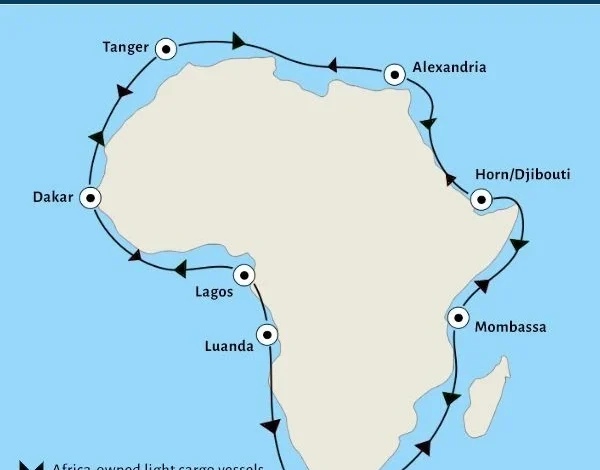
The African Continental Free Trade Agreement (AfCFTA) has created a single market, but goods still move too slowly. To accelerate trade, a bold solution is emerging: the creation of an African maritime line in a loop. This “coastal corridor” would connect the 8 main ports of the continent, transforming intra-African trade.
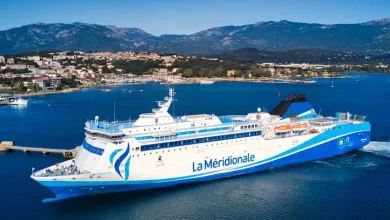
Today, a large part of African trade passes through only 15 coastal megacities. Transport between these cities is often slower and more expensive than sending goods to Europe. The proposed solution would be to use small-tonnage African vessels. They would operate on regular circular routes. This maritime circuit would thus create the true backbone of African trade, allowing for a bypass of the still-developing road and rail networks.
The route of this African maritime line would connect the main hubs of the continent:
Horn of Africa ⇄ Cape ⇄ Gulf of Guinea ⇄ Dakar ⇄ Tangier ⇄ Alexandria ⇄ back to the Horn.
Experts agree. Such a system could:
- Reduce logistics costs by 40 to 60%. This is a huge gain.
- Generate billions of dollars in additional GDP.
- Transform the AfCFTA from a political ambition into an operational reality.
Another strategic step would be to connect the major African rivers (Niger, Congo, Nile) to this coastal circuit. This would create a fully integrated multimodal network.
For this project to materialize, several levers are necessary:
- Capital mobilization: African financial institutions (AfDB, Afreximbank) must launch mixed financing.
- Coordination: Customs harmonization under the auspices of regional authorities is needed.
- Private investment: The commitment of operators, shippers, and innovators is essential.
- Operational discipline: Ports must be more efficient and cross-border systems smoother.
This African maritime line is a strategic choice for the future. Without this logistical integration, payments will be facilitated, but goods will remain stuck. With it, Africa can unlock the full potential of the AfCFTA, estimated at $450 billion by 2035.
The question remains: where to launch the first pilot project?