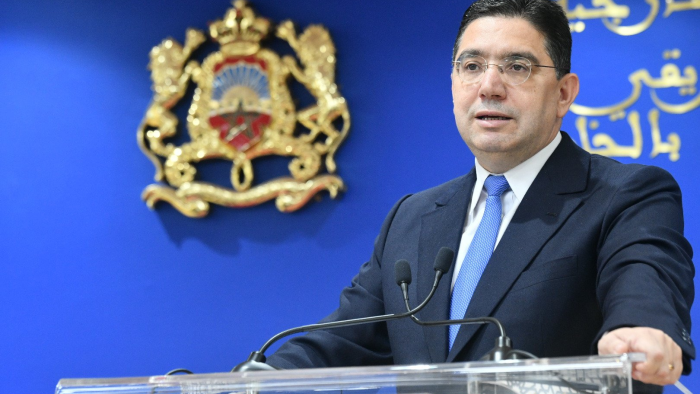
Morocco’s Maritime Diplomacy: Foundations and… The Moroccan Minister of Foreign Affairs, Nasser Bourita, recently articulated a clear vision regarding the maritime issues that underpin Morocco’s foreign policy. In a statement shared by the specialized site Maritime Fair Trade, he emphasized that « the sea is a vital space of continuity with the world » for Morocco, especially at a time when land tensions are diminishing in favor of intensified maritime rivalries.
Regarding the evolution of international relations, Bourita highlighted the complex historical legacy that characterizes this dynamic. He noted that many land conflicts have their origins in colonial legacies. Now, states, having regained their territorial sovereignty, are increasingly turning their attention to maritime spaces. This shift in perspective reveals that maritime claims are intertwined, illustrating contemporary geopolitical challenges.
The minister also underscored the crucial importance of the United Nations Convention on the Law of the Sea of 1982, regarded as an essential legal foundation for Morocco’s external actions. He clarified that this convention is not limited to the codification of rights but promotes dialogue and cooperation as fundamental principles for resolving disputes. Bourita mentioned joint development zones, a legal tool that transforms areas of potential disagreement into spaces for cooperation.
Furthermore, Morocco has made significant legal decisions, such as ratifying the 1982 convention and officially delineating its maritime spaces. These measures reflect a methodical approach to maritime sovereignty, relying on clear legal instruments, including laws governing territorial waters and the exclusive economic zone.
Concerning Euro-African partnerships, Bourita addressed the issue of migration by referencing the humanitarian approach adopted by the Kingdom, recognized for its leading role on the African continent. He stated that « Moroccan policy is centered around a rigorous balance between security requirements and respect for human dignity. » This approach positions Morocco as a « reliable partner of the European Union » in managing migratory flows.
Regarding relations with the European Union, the minister praised a partnership that is « long-standing, structured, and demanding. » This partnership encompasses various areas, including fishing, civil protection, and border management. In terms of fishery resources, Bourita indicated that Morocco allows access to its fishing zones under strict regulations, thereby ensuring sustainability and preserving maritime resources.