
UNCTAD Warns of Unprecedented Disruptions in Maritime Transport Threatening Global Trade
The main maritime routes of the Red Sea, the Black Sea, and the Panama Canal are simultaneously under threat, significantly impacting inflation as well as food and energy security.
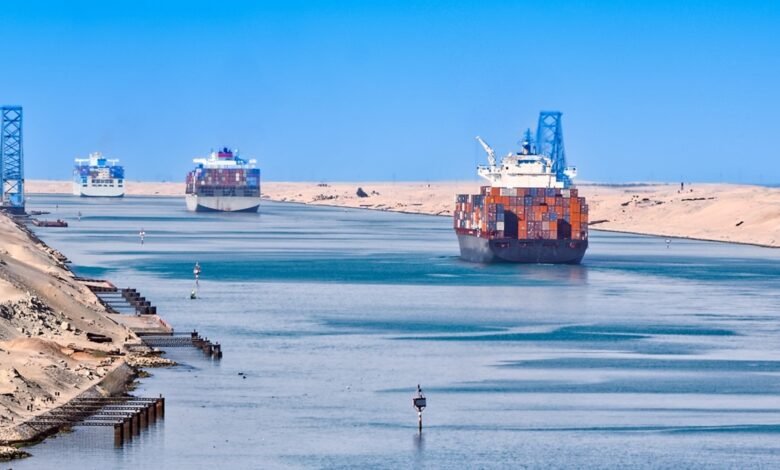
Recent attacks on commercial vessels in the Red Sea have severely disrupted maritime transport through the Suez Canal, compounding the geopolitical and climatic challenges facing global trade and supply chains, according to a newreportpublished by UNCTAD on February 22.
This situation adds to the ongoing disruptions in the Black Sea due to the war in Ukraine, which has led to changes in oil and grain trade routes, altering established patterns. Furthermore, the Panama Canal, a vital artery connecting the Atlantic and Pacific Oceans, is facing another issue: declining water levels. This has raised concerns about the long-term resilience of global supply chains, highlighting the fragility of global trade infrastructure.
UNCTAD estimates that transits through the Suez Canal have decreased by 42% from their peak. Major players in the shipping industry have temporarily suspended transits through the Suez Canal, resulting in a 67% drop in weekly container ship transits, while container transport capacity, tanker transits, and gas carriers have also seen significant declines. Meanwhile, the total number of transits through the Panama Canal has fallen by 49% from its peak.
A Costly Uncertainty
The growing uncertainty and the diversion from the Suez Canal in favor of a route around the Cape of Good Hope carry both economic and environmental costs, adding further pressure on developing economies.
Since November 2023, the average spot freight rates for containers have recorded the largest weekly increase ever, rising by $500 during the last week of December. This trend has continued.
The average spot freight rates for containers departing from Shanghai have more than doubled since early December (+122%). They have tripled for routes to Europe (+256%) and are even above average (+162%) for the West Coast of the United States, despite not passing through Suez.
Pressure on Developing Economies
Average Spot Freight Rates for Containers Departing from Shanghai…
Developing countries are particularly vulnerable to these disruptions, and UNCTAD remains vigilant regarding the evolving situation.
The organization emphasizes the urgent need for rapid adaptation within the shipping industry and strong international cooperation to manage the rapid reshaping of global trade. Current challenges highlight the exposure of global trade to geopolitical tensions and climate-related issues, necessitating collective efforts to find sustainable solutions, especially to support the most vulnerable countries facing these shocks.
The main maritime routes of the Red Sea, the Black Sea, and the Panama Canal are simultaneously under threat, significantly impacting inflation as well as food and energy security.
Recent attacks on commercial vessels in the Red Sea have severely disrupted maritime transport through the Suez Canal, compounding the geopolitical and climatic challenges facing global trade and supply chains, according to a newreportpublished by UNCTAD on February 22.
Maritime in the Maghreb
This situation adds to the ongoing disruptions in the Black Sea due to the war in Ukraine, which has led to changes in oil and grain trade routes, altering established patterns. Furthermore, the Panama Canal, a vital artery connecting the Atlantic and Pacific Oceans, is facing another issue: declining water levels. This has raised concerns about the long-term resilience of global supply chains, highlighting the fragility of global trade infrastructure.
UNCTAD estimates that transits through the Suez Canal have decreased by 42% from their peak. Major players in the shipping industry have temporarily suspended transits through the Suez Canal, resulting in a 67% drop in weekly container ship transits, while container transport capacity, tanker transits, and gas carriers have also seen significant declines. Meanwhile, the total number of transits through the Panama Canal has fallen by 49% from its peak.
The Growing Uncertainty and the Abandonment of the Canal…
A Costly Uncertainty
The growing uncertainty and the diversion from the Suez Canal in favor of a route around the Cape of Good Hope carry both economic and environmental costs, adding further pressure on developing economies.
The Main Maritime Routes of…
Since November 2023, the average spot freight rates for containers have recorded the largest weekly increase ever, rising by $500 during the last week of December. This trend has continued.
The average spot freight rates for containers departing from Shanghai have more than doubled since early December (+122%). They have tripled for routes to Europe (+256%) and are even above average (+162%) for the West Coast of the United States, despite not passing through Suez.
Developing Countries are…
Pressure on Developing Economies
Average Spot Freight Rates for Containers Departing from Shanghai…
Developing countries are particularly vulnerable to these disruptions, and UNCTAD remains vigilant regarding the evolving situation.
The organization emphasizes the urgent need for rapid adaptation within the shipping industry and strong international cooperation to manage the rapid reshaping of global trade. Current challenges highlight the exposure of global trade to geopolitical tensions and climate-related issues, necessitating collective efforts to find sustainable solutions, especially to support the most vulnerable countries facing these shocks.