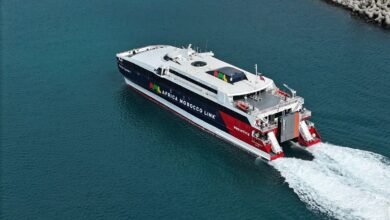

Réductions Inédites Jusqu’à 30 % pour des Croisières Inoubliables vers le Maroc en 2025
L’été 2025 se profile à l’horizon comme une saison pleine de promesses pour les amateurs de croisières et d’aventures maritimes. Balearia, l’une des compagnies de ferry les plus renommées de la Méditerranée, a annoncé le lancement d’offres exceptionnelles qui permettront aux voyageurs de profiter de réductions significatives sur les traversées vers le Maroc. Cette initiative vise à relancer le tourisme maritime et représente une opportunité en or pour ceux qui souhaitent explorer les merveilles des côtes marocaines.
Offres Imbattables pour des Traversées Vers le Maroc
Du 15 juin au 30 septembre 2025, Balearia propose une réduction de 20 % sur les billets aller-retour pour les passagers empruntant la liaison Tarifa – Tanger avec un véhicule. Pour les trajets Algésiras – Tanger Med et Motril – Tanger Med, la réduction grimpe à 30 % pour des billets similaires, disponibles du 1er juillet au 30 septembre. Cette offre permet aux passionnés de road trip de découvrir le Maroc à des tarifs plus accessibles, facilitant ainsi l’exploration des paysages fascinants du pays. Les voyageurs désireux de bénéficier de ces tarifs avantageux devront effectuer leurs réservations avant le 25 mai à 23h59. Il est à noter que cette promotion est soumise à certaines conditions, notamment l’exigence d’acheter des billets aller-retour avec véhicule. Bien que les réservations puissent être modifiées, elles ne sont pas remboursables en cas d’annulation, incitant ainsi les voyageurs à bien planifier leur escapade.
Un Voyage au Cœur d’une Destination Éblouissante
Le Maroc, avec ses plages de sable doré et ses majestueuses montagnes de l’Atlas, se révèle être une destination de choix pour les croisiéristes. Les villes côtières, comme Tanger et Essaouira, riches en patrimoine culturel et historique, attirent chaque année un nombre croissant de visiteurs. Cette tendance s’inscrit dans un contexte où le secteur des croisières dans la région du Maghreb connaît une croissance rapide, faisant de la Méditerranée un carrefour dynamique pour le transport maritime. En parallèle de ces initiatives, Balearia s’engage activement en faveur du développement durable. La compagnie a renforcé ses efforts pour réduire son empreinte carbone grâce à l’introduction de nouveaux navires dotés de technologies innovantes, réduisant ainsi les émissions polluantes. Cette démarche répond à une demande croissante des consommateurs pour des options de voyage respectueuses de l’environnement, s’inscrivant dans un mouvement mondial vers une navigation plus verte.
Une Compétition Renforcée dans le Secteur Maritime
Outre les offres attractives de Balearia, d’autres compagnies de ferry, comme CTN Ferries et GNV, mettent également en avant des promotions alléchantes pour les liaisons maritimes entre l’Europe et le Maghreb. CTN Ferries a récemment ouvert ses réservations pour des traversées vers la Tunisie, disponibles jusqu’à fin septembre 2026, tandis que GNV annonce des réductions pouvant atteindre 35 % sur des voyages en Méditerranée. Ces initiatives témoignent d’une volonté collective de rendre le transport maritime plus accessible et attrayant pour les vacanciers. Les croisières se positionnent ainsi comme un choix privilégié pour les familles, les couples et les groupes d’amis en quête de vacances mémorables. En plus de la possibilité de voyager avec leur véhicule, les passagers peuvent profiter d’une gamme de services à bord, allant de la restauration aux activités de loisirs, garantissant une expérience de voyage à la fois confortable et agréable. Alors que le secteur du tourisme maritime continue de se redresser après les perturbations causées par la pandémie, les opportunités d’exploration des côtes méditerranéennes se multiplient. Les réductions offertes par Balearia ne sont qu’un aperçu des avantages à venir pour ceux qui envisagent de naviguer vers le Maroc cet été. Avec des offres de plus en plus compétitives et une attention accrue portée à l’expérience client, la croisière s’affirme comme un mode de transport en pleine croissance dans la région. En conclusion, les offres de croisières vers le Maroc en 2025 constituent une opportunité exceptionnelle pour découvrir la richesse culturelle, historique et naturelle de cette destination fascinante. Les voyageurs sont invités à tirer parti de ces réductions inégalées et à se préparer pour un été mémorable en Méditerranée.