
Tanger Med: An ambitious extension to strengthen its maritime position
The port of Tanger Med, already recognized as the largest port in Africa and the Mediterranean, is poised for a transformative expansion. As reported by The Inspirations Eco on December 16, the Tanger Med Port Authority has launched a call for tenders for this ambitious project, attracting the attention of foreign partners, including the renowned French operator Bouygues, who recently visited Morocco to explore collaboration opportunities.
Overview of Tanger Med’s Strategic Importance
Inaugurated in 2007, Tanger Med has rapidly established itself as a pivotal player in international maritime trade, benefiting from its strategic geographical location near the Strait of Gibraltar. This position allows it to serve as a crucial gateway between Europe, Africa, and beyond. Following the expansion of Tanger Med 2, the port has significantly improved its global standing among container ports, achieving a remarkable throughput of 10.2 million TEUs (twenty-foot equivalent units) in 2024. This figure represents an impressive 18.8% increase compared to 2023, elevating Tanger Med into the ranks of the top twenty global ports, according to Alphaliner.
However, this rapid growth in traffic has raised concerns about potential saturation as early as 2025. With the increasing volume of transshipment traffic and burgeoning import-export activities, the urgency for this new extension is palpable. The upcoming project, often referred to as Tanger Med 3, is not envisioned as an autonomous port but rather as an expansion of the existing Tanger Med 2 facility. This initiative is crucial to accommodate the growing demand for maritime trade and ensure the port’s continued competitiveness.
Details of the Proposed Expansion
While specific details regarding the location of the extension have yet to be confirmed, The Inspirations Eco has outlined two potential scenarios. The first option involves extending the existing site towards Ksar Sghir and the naval base of the Royal Navy, while the second proposes an expansion further west, between Oued Alian and Malabata. These options reflect a strategic approach to enhancing port capacity while considering environmental impacts and logistical feasibility.
The port authorities have indicated that the current call for tenders is primarily aimed at consulting with national and international stakeholders, selected for their expertise and ability to assist the Tanger Med Port Authority in this strategic endeavor. This collaborative approach is essential for ensuring that the extension meets both current and future demands of maritime trade.
Expert Insights on the Future of Tanger Med
Professor Najib Cherfaoui, a prominent maritime expert, has stressed the importance of adopting an evolutionary approach to prepare for the future of the port. According to him, the initial vision for Tanger Med should have included the capacity for adaptability from the outset. This foresight would have allowed for a handling capacity of nearly twenty million containers by 2025, positioning Tanger Med among the top nine global ports and surpassing established giants such as Los Angeles, Hong Kong, and Rotterdam.
Currently, the port primarily functions as a transshipment center but is increasingly playing a vital role in Morocco’s import-export activities. This shift not only reinforces Tanger Med’s strategic significance but also highlights its importance for the broader Moroccan economy. The port’s success is a vital component of Morocco’s growth trajectory, as it serves as a hub for various economic activities, including logistics, manufacturing, and international trade.
The Broader Context of Maritime Activities in the Maghreb
The maritime sector in the Maghreb, encompassing Morocco, Tunisia, and Algeria, has been undergoing significant transformations. In Morocco, in addition to Tanger Med, the ports of Casablanca and Agadir are also vital for trade and tourism. Casablanca, for instance, is a key player in the import and export of goods, while Agadir serves as a major hub for fishery products, particularly sardines, which are a staple of the Moroccan economy.
Tunisia’s maritime landscape is marked by the port of La Goulette, which serves as the main access point to the capital, Tunis. The port of Rades, located nearby, plays a significant role in container shipping and logistics. Tunisia has also been investing in modernizing its ports to enhance their capacity and efficiency, with an emphasis on attracting foreign investment and improving maritime infrastructure.
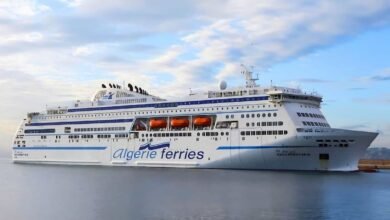
In Algeria, the port of Algiers remains one of the most important maritime gateways for trade and passenger transport. The Algerian government has been focusing on enhancing its port facilities to boost trade and attract more cruise liners, thereby promoting tourism. Companies such as Algérie Ferries play a crucial role in connecting Algeria with other Mediterranean countries through ferry services.
Challenges and Opportunities in the Maritime Sector
Despite the growth prospects, the maritime sector in the Maghreb faces several challenges. Infrastructure limitations, bureaucratic inefficiencies, and environmental concerns are among the primary issues that need to be addressed. For example, the increasing vessel sizes in global shipping require ports to continuously upgrade their facilities and services. Additionally, the competitive landscape is intensifying as ports in neighboring countries, such as Spain and Italy, enhance their capabilities to attract shipping lines.
However, these challenges also present opportunities for innovation and collaboration. The adoption of digital technologies, such as blockchain for logistics and IoT for monitoring cargo, can significantly improve efficiency in port operations. Furthermore, sustainable practices and investments in green shipping can position Maghreb ports as leaders in environmental responsibility within the maritime industry.
Conclusion
The ambitious extension of the Tanger Med port is a vital step in ensuring that Morocco retains its competitive edge in the global maritime landscape. As it prepares for this transformation, the port authorities must consider not only the immediate operational needs but also the long-term sustainability and adaptability of the port. As the Maghreb continues to evolve as a maritime hub, the collaboration between governments, port authorities, and private operators will be essential in shaping the future of maritime trade in the region.
For further insights into maritime developments in the Maghreb, you can explore resources such as Seatrade Maritime and Port Strategy, which provide comprehensive coverage of shipping and logistics news.