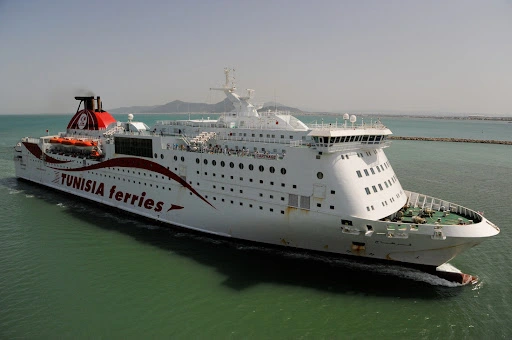
CTN : traversées Carthage modifiées (21–23 janvier 2026) – météo
Voyager en ferry, c’est souvent choisir une expérience différente de l’avion : plus d’espace, un rythme plus calme, la possibilité d’emporter davantage de bagages, et parfois l’option de voyager avec un véhicule. Mais le transport maritime a une particularité incontournable : il dépend fortement des conditions de mer et de météo. En Méditerranée, surtout en hiver, des épisodes de vents forts et de houle peuvent perturber les manœuvres d’entrée/sortie de port, rallonger les temps de traversée ou obliger les compagnies à décaler un départ pour garantir la sécurité.
C’est exactement le sens du communiqué publié par la Compagnie Tunisienne de Navigation (CTN) : en raison de mauvaises conditions météo sur le bassin méditerranéen entre le 20 et le 22 janvier 2026, la compagnie a annoncé un ajustement de programmation pour le navire “Carthage”. L’objectif affiché est clair : préserver la sécurité et le confort des passagers.
Même si un décalage d’horaires peut sembler “gênant”, il est généralement préférable à une situation où l’on navigue dans des conditions trop dégradées. Le bon réflexe, côté voyageur, consiste donc à comprendre précisément ce qui change (date et heure), puis à adapter sa logistique : arrivée au port, correspondances, hébergement, et information des proches.
Cet article reprend les modifications annoncées, les explique simplement, et propose une checklist pratique pour éviter toute mauvaise surprise — utile en Tunisie, mais aussi pour des voyageurs venant d’Algérie ou du Maroc (diaspora, trajets combinés, correspondances en Europe, etc.), car les actualités maritimes du Maghreb intéressent souvent un public régional.
1) Ce que dit le communiqué CTN (cause et période)
La CTN indique que les conditions météo défavorables concernent la période du 20 au 22 janvier 2026 en Méditerranée et que, par souci de sécurité et de confort, le programme du navire Carthage est modifié sur certaines traversées.
À retenir :
- Ce n’est pas une décision “commerciale” : c’est un ajustement opérationnel lié à la météo.
- Les ports sont concernés indirectement : selon la houle et le vent, les manœuvres de quai peuvent être plus longues ou plus risquées.
- La ponctualité maritime reste “estimative” : même après un décalage, un nouvel ajustement peut être annoncé si la mer se dégrade.
2) Détail des nouveaux horaires : Tunis / Marseille / Tunis (21–23 janvier 2026)
La CTN annonce un décalage complet de la rotation Tunis → Marseille → Tunis, initialement prévue plus tôt, et repositionnée du 21 au 23 janvier 2026. Voici la version claire des horaires communiqués :
Départ de Tunis (La Goulette) vers Marseille
- Nouveau départ : mercredi 21 janvier 2026 à 10h00
- (au lieu de mardi 20 janvier 2026)
Arrivée à Marseille
- Nouvelle arrivée : jeudi 22 janvier 2026 à 10h00
- (au lieu de mercredi 21 janvier 2026)
Départ de Marseille vers Tunis
- Nouveau départ : jeudi 22 janvier 2026 à 14h00
- (au lieu de mercredi 21 janvier 2026)
Arrivée à Tunis (La Goulette)
- Nouvelle arrivée : vendredi 23 janvier 2026 à 12h00
- (au lieu de jeudi 22 janvier 2026)
👉 En résumé, la rotation est “décalée” d’environ une journée, avec un retour à Tunis le 23 janvier à midi.
3) Détail des nouveaux horaires : Tunis / Gênes (23 janvier 2026)
Le communiqué mentionne aussi un ajustement sur la traversée Tunis → Gênes du vendredi 23 janvier 2026 :
- Nouveau départ de La Goulette : 15h00
- (au lieu de 11h00)
Ici, la date reste la même, mais l’horaire de départ est repoussé de 4 heures. Cela peut paraître “simple”, mais cela change beaucoup de choses pour un passager : l’heure d’arrivée au port, le moment de l’enregistrement, et l’organisation de la journée.
4) Pourquoi ces changements arrivent souvent en hiver (explication pédagogique)
En hiver, le bassin méditerranéen peut connaître :
- des vents forts (mistral, tramontane, etc. selon zones),
- une houle plus marquée,
- et des conditions de manœuvre plus délicates dans les ports.
Même si le navire et l’équipage sont préparés, la décision de décaler une traversée répond à un principe simple : réduire le risque et améliorer le confort. Une traversée effectuée au “mauvais moment météo” peut devenir :
- plus longue,
- plus inconfortable (tangage/roulis),
- et plus compliquée au niveau des opérations portuaires.
La CTN publie ce type d’alertes et d’ajustements sur ses canaux officiels, y compris via son site et ses communications publiques.
5) Checklist voyageur : quoi faire concrètement après un changement d’horaire
Voici les actions les plus utiles, dans l’ordre :
A) Confirmer que votre billet est bien “recalé”
- Vérifiez votre email/SMS de confirmation (si vous en recevez).
- Consultez le canal officiel de la compagnie (site, réseaux sociaux).
- Si vous avez réservé via une agence, appelez l’agence pour une confirmation écrite.
B) Recalculer votre heure d’arrivée au port
En période de perturbation, arrivez plus tôt que d’habitude.
Pourquoi ? Parce que le flux passagers peut se concentrer sur un créneau plus réduit, et les contrôles peuvent prendre plus de temps.
C) Prévoir une marge sur les correspondances
Si vous aviez :
- un train après l’arrivée à Marseille,
- un vol intérieur,
- ou un rendez-vous professionnel,
ajoutez une marge de sécurité. Le maritime n’a pas la “précision minute” de certains transports terrestres.
D) Informer la personne qui vous attend
Un décalage d’un jour ou de quelques heures change les pick-up, les réservations et l’organisation familiale.
E) Garder sous la main les contacts utiles
La CTN a communiqué des numéros d’information pour guider les passagers.
6) Repères ports : La Goulette, Marseille, Gênes
Pour les voyageurs, il est utile de savoir :
- La Goulette est le principal port passagers de Tunis, intégré aux réseaux routiers/ferroviaires, et géré dans un cadre institutionnel tunisien (OMMP).
- Marseille et Gênes sont des hubs méditerranéens majeurs : en cas de météo, la congestion portuaire et les fenêtres d’accostage peuvent aussi influencer les horaires.
7) Pourquoi cette info est très partagée au Maghreb (Algérie / Maroc)
Même si le trajet ici est Tunisie–France/Italie, ces ajustements intéressent souvent au-delà de la Tunisie :
- La diaspora maghrébine organise parfois des itinéraires combinés.
- Les voyageurs comparent régulièrement les options maritimes et aériennes à l’échelle régionale.
- En haute saison ou en période météo instable, les nouvelles sur le maritime se diffusent vite entre communautés en Algérie, Tunisie et Maroc.